6′-Sialyllactose: The Breast Milk Molecule That Could Change the Fight Against Metabolic Disease
by Mary Ferrari
“Although insulin treatment helps control blood sugar, it does not always prevent inflammation and damage to other organs, including the liver and skeletal muscles.”
Type 1 diabetes (T1DM) is an autoimmune disease in which the immune system attacks and destroys insulin-producing cells in the pancreas, and without enough insulin, blood sugar rises, creating stress throughout the body. Although insulin treatment helps control blood sugar, it does not always prevent inflammation and damage to other organs, including the liver and skeletal muscles. Researchers are now looking beyond blood sugar control to understand how inflammation and metabolic changes contribute to diabetic complications.
Although this study used a model of type 1 diabetes, its findings have important connections to type 2 diabetes and metabolic syndrome. Insulin resistance, a central feature of type 2 diabetes, creates many of the same metabolic problems, including elevated blood sugar, liver injury, abnormal fat storage, skeletal muscle inflammation, and disrupted cellular energy signaling. Over time, the pancreas may also lose its ability to produce enough insulin as insulin-producing beta cells become damaged or dysfunctional. In both forms of diabetes, metabolic stress and inflammation can contribute to progressive organ damage. This makes the study of 6′-sialyllactose especially interesting because its protective effects involved not only glucose regulation but also inflammation, liver health, and metabolic signaling.
The liver is especially vulnerable to the effects of insulin deficiency, it plays an important role in controlling blood sugar, storing energy, and processing fats. In diabetes, when these functions become disrupted, the liver may produce too much glucose, store less glycogen, and develop problems processing fats. These changes increase oxidative stress, inflammation, and damage to liver cells. Studies using streptozotocin (STZ), a chemical commonly used to create experimental models of diabetes, have shown increases in liver enzymes and cell death, indicating early liver injury.
Streptozotocin (STZ, or streptozocin; is a naturally occurring, glucose-conjugated nitrosourea and alkylating agent derived from the soil bacterium Streptomyces achromogenes. It is widely used in laboratory settings to induce animal models (typically in rodents) for Type 1 and Type 2 diabetes mellitus by selectively damaging or destroying beta cells. It is also utilized in specialized research to model sporadic Alzheimer’s-like pathology and brain insulin resistance.
Skeletal muscle also plays an important role because it is one of the body’s main tissues for removing glucose from the bloodstream and when muscle function becomes impaired, blood sugar control can worsen. Researchers have also found that diabetes increases inflammatory signals in muscle tissue. Two important inflammatory molecules are TNF-α and IL-1β. These substances can contribute to inflammation throughout the body and increase the metabolic burden on the liver.
This study investigated whether 6′-sialyllactose (SL), a special human milk oligosaccharide (HMO) naturally found in breast milk, could protect against these effects. SL has attracted scientific interest because of its ability to influence immune responses and metabolic activity. Researchers examined whether it could reduce high blood sugar, protect the liver, decrease muscle inflammation, and restore important metabolic pathways.
The researchers used STZ to induce diabetes in mice. The results showed that blood glucose increased from approximately 115 mg/dL in healthy control mice to 230 mg/dL in diabetic mice. However, pretreatment with SL lowered blood glucose to 139 mg/dL at 25 mg/kg and 133 mg/dL at 75 mg/kg. These results were better than metformin, which reduced glucose to 140 mg/dL.
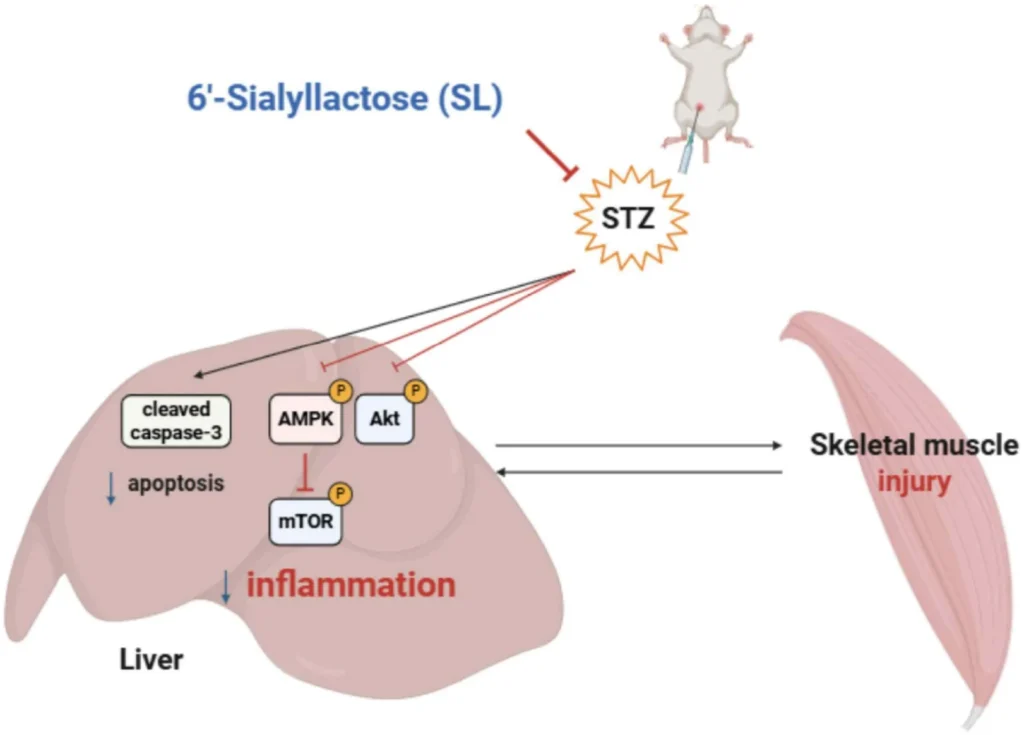
One particularly important finding was the protection of the liver. SL reduced elevated liver enzymes, including AST, ALT, ALP, and GGT, which are indicators of liver injury. It also helped restore normal protein metabolism and improved measures of liver function. In addition, SL reduced cleaved caspase-3, a marker associated with programmed cell death, suggesting that fewer liver cells were undergoing apoptosis. These findings indicate that SL helped protect liver tissue from early diabetic injury.
The benefits extended beyond the liver. SL significantly reduced inflammatory TNF-α and IL-1β activity in skeletal muscle. This suggests that SL may help control inflammation in multiple metabolic tissues rather than simply lowering blood sugar.
Researchers also discovered that SL restored important metabolic signaling pathways involving AMPK, Akt, and mTOR. These pathways help cells manage energy, regulate metabolism, and survive cellular stress. By improving this signaling balance, SL may help reduce inflammation, oxidative stress, and tissue damage.
Together, these findings suggest that 6′-sialyllactose may offer protective effects beyond glucose control. This landmark study identifies an important potential role for a breast milk oligosaccharide in protecting metabolic organs against diabetes-related inflammation and injury.
Source:
2026
Phan LP, Nguyen TLL, Tran-Duc PN, Heo KS. Effect of human milk oligosaccharide on the liver-skeletal muscle axis in streptozotocin-induced metabolic stress. Korean J Physiol Pharmacol. 2026 Nov 1;30(6):585-592. doi: 10.4196/kjpp.26.014. Epub 2026 Jul 14. PMID: 42443109; PMCID: PMC13728256.
Supplement Info
The study tested two doses of 6′-sialyllactose (6′-SL):
– 25 mg/kg
– 75 mg/kg
The researchers also used metformin as a comparison treatment. The lower and higher SL doses produced very similar reductions in blood glucose, so the study did not demonstrate a clear advantage from the higher dose.
Mouse dose | Human weight | Estimated equivalent |
|---|---|---|
25 mg/kg | 154 lbs (70 kg) | 142 mg |
75 mg/kg | 154 lbs (70 kg) | 426 mg |
These are conversions from mouse doses, not proven human doses or supplement recommendations.
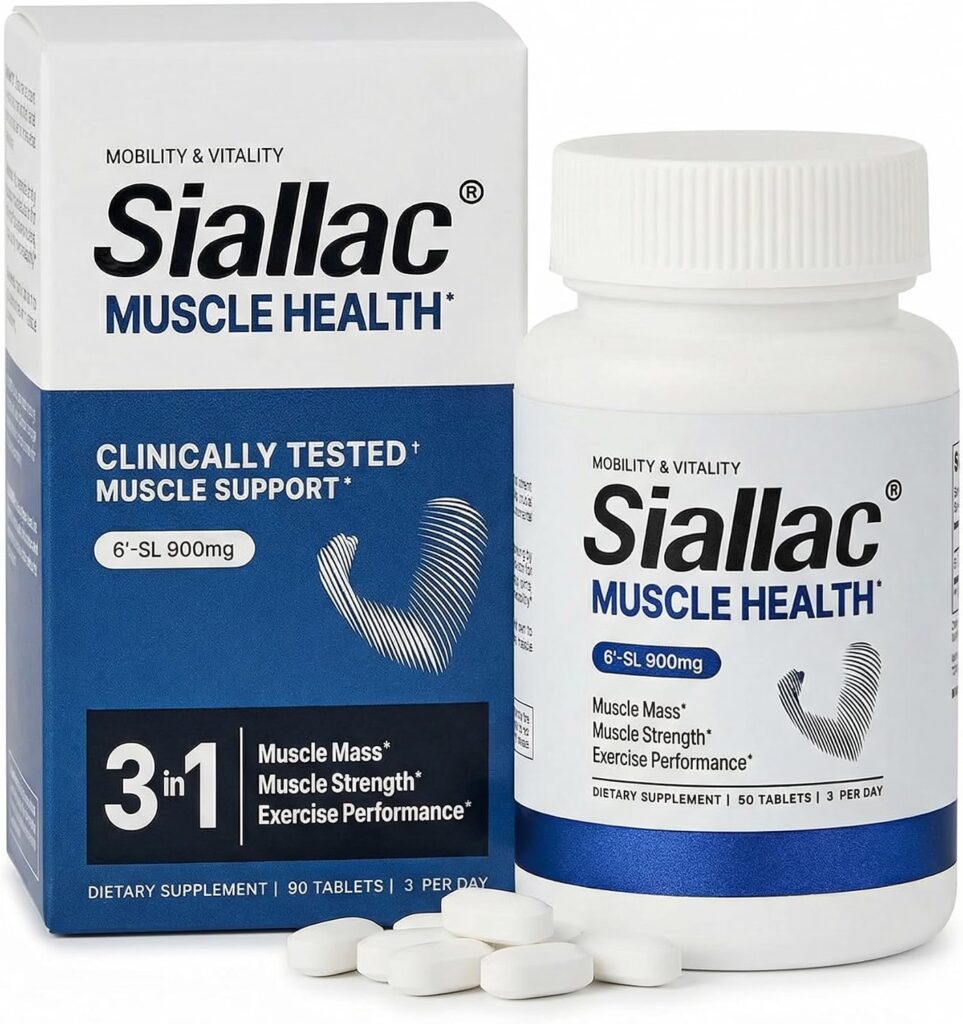
Not Just Muscle Recovery - Systemic Recovery
Testimonial………..
“I can carry my mug of coffee with one hand. I can reach the top shelf without muscle cramps. My grandson helped me walk one block, slow and wobbly, but I made it! “
“My story begins with a childhood filled with anxiety over everything in life. I was afraid I would miss the bus after school. I was afraid to use the bathroom at school. I was afraid to read out loud before the class. When I was 13 years old, a skin test at school showed I had TB. The county medical office gave me an X-ray and some medicine. I took a very powerful antibiotic, INH, for a year. You know what happened to my entire digestive system. We had no idea what this did to me. It killed everything, good and bad. Oddly, the county medical office never followed up on my case. The medicine must have worked because I lived. That was 60 years ago and I have been plagued with illness ever since, from tonsillitis, thrush, virus, mouth sores, migraines, female problems, vertigo, fibromyalgia, Dysautonomia, Bronchiectasis, Sjogren’s, Rheumatoid Arthritis, POTS. You get the idea? Now, I just try to manage my symptoms so I can play with my grandkids. I’ve stopped begging doctors to help me. They don’t have the time or training to help me. I don’t blame anyone who says they don’t believe me. If I was you, I don’t think I could believe me! Recently, I was just trying to find something to help my muscles. The pain, cramps and fatigue in my muscles was the worst. I couldn’t raise my arms over my head, I couldn’t walk down my hallway with out my leg’s shaking. I take your HMOs with probiotics. So I started looking at your products. I had not noticed the Muscle Strength powder before. I used one container in a month and wasn’t getting relief. So, I seriously considered returning it. I decided to give it one more month. I just finished 7 weeks on the powder. I can carry my mug of coffee with one hand. I can reach the top shelf without muscle cramps. My grandson helped me walk one block, slow and wobbly, but I made it! I don’t know or understand what’s in this powder but I am so thankful and glad I didn’t return that second container. I don’t blame your company if you don’t make public my review because it sounds like I’m crazy. I will continue to put this powder in my coffee every morning as long as you offer it.”
- Helps with Muscle Weakness: Previous studies show 6′-Sialyllactose supplies sialic acid to muscle cells and increases muscle weight and grip strength, particularly in key muscles.
- Activates Muscle Growth Pathways: Promotes the expression of myosin heavy chain proteins—vital for muscle fiber development, contraction, and long-term strength.
- Reduces Lactate Build-Up, Speeds Recovery:
- Strengthens the gut barrier and lowers systemic lactate, helping reduce muscle fatigue and accelerate post-exercise recovery.
- Supports Endurance Through Better Energy Use: Enhances mitochondrial efficiency and slow-twitch muscle fiber activity for longer-lasting stamina and reduced exercise fatigue.
Layer Origins
"Feel better almost immediately I have dysbiosis that has led to SIBO, systemic inflammation, dermatological and joint related issues. On bad flares I get intense joint inflammation and pain to the point of feeling as if I’ve had arthritis for fifty years. Taking this product for just two or three days reverses the inflammation to where I honestly can’t even feel it and my SIBO gas is reduced significantly. This stuff does not make me feel bloated and I can barely tell it is in my shaker" J.