The Gut Brain Connection That Doctors Don't Talk About - Repairing the Nervous System
by Mary Ferrari
“Scientists are uncovering a startling reality: the microscopic organisms living in your digestive tract hold immense power over your brain, your immune system, and your overall health.”
The Hidden Control Center Inside Your Body
Have you ever felt like you are doing everything right, yet your body still feels completely out of sync? Millions of people search for answers to unexplained brain fog, persistent fatigue, and unpredictable nerve issues, only to be met with vague explanations. What if the most crucial piece of the puzzle isn’t hidden deep inside your brain, but sitting right inside your digestive system?
Scientists are uncovering a startling reality: the microscopic organisms living in your digestive tract hold immense power over your brain, your immune system, and your overall health. Research by Alicia Sánchez-Sanz and Sergio E. Baranzini highlights how the gut microbiome plays a pivotal role in neurological conditions like multiple sclerosis. The microbes in your gut do not merely digest food. They constantly broadcast biological signals directly to your central nervous system through a high-speed network known as the gut-brain axis.
When your intestinal ecosystem becomes unbalanced, the consequences extend far beyond digestion problems. Harmful shifts in gut bacteria can disrupt critical immune responses, weaken protective biological barriers, and perpetuate chronic inflammation. This systemic inflammatory state can ultimately attack nerve tissue in the brain and spinal cord, driving the onset and progression of multiple sclerosis.
How Gut Microbes Influence Your DNA
The influential breakdown happens at the molecular level, driven by what your bacteria produce. Breakthrough research by X. Xu and colleagues reveals that gut bacteria produce special compounds called short-chain fatty acids during the fermentation of dietary fibers. These microbial short-chain fatty acids act as biological switches, known as epigenetic mediators, that fine-tune communication across the gut-brain axis.
Epigenetics refers to changes in gene activity that occur without altering your underlying DNA sequence and while your genetic code remains fixed, the compounds generated by your gut bacteria possess the power to flip specific genetic switches on or off inside your brain cells. When beneficial short-chain fatty acids are abundant, they promote immune tolerance, maintain tight biological barriers, and dampen neuroinflammation but when these vital microbial metabolites are lacking, the delicate biochemical balance collapses, leaving the nervous system vulnerable to damage.
Understanding this biological mechanism changes how we view complex health struggles. The connection between gut health and neurological function is an active biological process happening inside you and you can influence it.
Rewriting the Future of Brain Health
For years, neurological conditions were viewed as static, irreversible challenges centered purely inside the skull. Today, research proves that your gut microbiome acts as a dynamic control panel that can be influenced, restored, and supported. By targeting the gut-brain axis, supporting beneficial bacteria, and encouraging the production of short-chain fatty acids, science is discovering revolutionary new pathways for neurological care.
Your biological potential is not entirely locked in your genes; it is heavily shaped by the trillions of microscopic allies living inside your digestive tract. Taking control of your gut environment gives your body the biochemical tools it needs to regulate inflammation, protect nerve tissue, and support long-term brain health from the inside out.
Dendritic Cells: The Lock and Key to Your Immune System
To understand how gut signals govern immune response, one has to look at the gatekeepers of immunity: dendritic cells.
Research by L. Xiao and colleagues demonstrates that dendritic cells act as the ultimate lock and key to the immune system.
They actively sample compounds in the gut environment and determine whether your body reacts with inflammatory defense or maintains peaceful immune tolerance.
When specialized compounds like milk oligosaccharides directly interact with human dendritic cells, they turn the key toward immune tolerance.
Instead of sounding a false alarm that leads to autoimmune attacks, properly signaled dendritic cells instruct the immune system to remain calm, calming systemic inflammation before it can target your central nervous system.
In a landmark August 2026 clinical trial published in Cell Reports Medicine, researchers discovered that supplementing with a blend of six manufactured, structurally diverse HMOs successfully re-programs the body’s immune pathways with the addition of B. infantis plus B. lactis. The study details how early-life supplementation with a six-HMO and B. infantis synbiotic blend expands immuno-regulatory plasmacytoid dendritic cells (pDCs). This process activates a protective pDC–Treg immune axis that increases 12-HHT and suppresses runaway Th2-biased tissue inflammation.
The study also demonstrated that this exact combination altered the gut environment and attenuated the systemic Th2 bias in formula-fed infants, effectively imprinting a balanced immune cell network that closely resembled the natural tracking observed in exclusively breastfed infants.
“We demonstrate that supplementation with this infant-type synbiotic changes systemic immune cell networks and reduces a Th2 bias in formula fed infants, to more closely follow the pattern observed in exclusively breastfed infants enrolled as a non-randomized reference group. To gain further mechanistic insight, we evaluated the impact of early-life synbiotic supplementation on preclinical models of respiratory infection and allergic airway inflammation. We find that synbiotic supplementation improves disease tolerance toward an sLRI associated with aberrant Th2 responses in early life and reduces susceptibility to experimental asthma later in life. The improved infection and allergy outcomes following synbiotic supplementation associate with significant changes in the levels of systemic metabolites and the expansion of immunoregulatory plasmacytoid dendritic cells (pDCs) and regulatory T cell (Treg) responses. Together, these findings support the concept that during a critical developmental window in early life an infant-type synbiotic has the capacity to shape immune system imprinting and prevent the development of a severe infection and subsequent asthma via the promotion of disease tolerance.“
How Gut Microbes and Antibodies Drive Brain Repair
Neurodegenerative diseases, including Alzheimer’s and Parkinson’s, involve the progressive loss of brain cell structure and function. Although genetics and environmental factors contribute to these diseases, research increasingly links gut microbiome imbalances to disease development through the gut–brain axis, which connects the gut and brain through nerve, immune, hormonal, and metabolic pathways (Pan et al., 2024; Suchiita et al., 2025).
Gut bacteria produce short-chain fatty acids (SCFAs) when they ferment dietary fiber. These compounds help regulate gene activity, protect intestinal barriers, reduce brain inflammation, and support communication between the gut and brain. SCFAs also promote the growth of new neurons, strengthen connections involved in learning and memory, and support mitochondrial energy production. Butyrate helps activate genes involved in neuron survival, while acetate supports glutamate recycling and propionate helps maintain communication between neurons (Yang et al., 2020; Jaworska et al., 2019; Sun et al., 2023; Grüter et al., 2023).
SCFAs may also protect brain cells from oxidative stress and support mitochondrial function. In Parkinson’s disease models, propionate increased mitochondrial formation and helped preserve dopamine-producing neurons (Kassan et al., 2023; Cao et al., 2025a). Together, these findings suggest that gut microbial metabolites help protect brain function and offer promising directions for neurodegenerative disease research.
Beyond preventing damage, your body can actively rebuild damaged nerve shielding. Research by Y. Li and colleagues demonstrates that immunoglobulins directly enhance the differentiation of oligodendrocyte-precursor cells, the specialized cells responsible for generating new myelin and actively promote remyelination. Because natural sources like bovine colostrum are packed with immunoglobulins (IgG), that reveal how targeted immune factors can support active tissue repair in conditions like multiple sclerosis.
What You Can Do
Understanding this complex biological network raises an actionable question: what can you do to support these mechanisms every day?
- Nurture your microbiome: Consume prebiotics and fibers that fuel gut bacteria, driving the production of short-chain fatty acids that signal your brain cells. And don’t forget bifidobacterium.
- Support immune tolerance: Provide your digestive system with bioavailable immune-modulating nutrients (HMO’s) that interact with dendritic cells to promote anti-inflammatory signaling.
- Promote myelin repair: Incorporate immunoglobulins, such as those naturally found in bovine colostrum, to provide your body with the biological tools that support cellular repair and remyelination.
Your biological potential is not locked in place. By taking targeted control of your gut environment and immune inputs, you give your body the exact tools it needs to regulate inflammation, protect nerve tissue, and restore long-term brain health from the inside out.
Source:
2026
Gut-derived butyrate as a key regulator in the pathogenesis of multiple sclerosis
2026
Sánchez-Sanz, Alicia, and Sergio E. Baranzini. 2026. “The Gut Microbiome in Multiple Sclerosis.” Neurology: Neuroimmunology & Neuroinflammation 13 (6): e200638. https://doi.org/10.1212/NXI.0000000000200638.
The Gut Microbiome in Multiple Sclerosis
2026
Xu X, Cheng Y, Liu X, Ding W, Zhu Z, Wu L, Ling Z, Gao Y, Yue J. Microbial SCFAs as epigenetic mediators: fine-tuning the gut-brain axis in neurodegenerative disorders. Curr Res Microb Sci. 2026 Feb 23;10:100574. doi: 10.1016/j.crmicr.2026.100574. PMID: 41798063; PMCID: PMC12966653.
2019
Xiao L, van De Worp WR, Stassen R, van Maastrigt C, Kettelarij N, Stahl B, Blijenberg B, Overbeek SA, Folkerts G, Garssen J, Van’t Land B. Human milk oligosaccharides promote immune tolerance via direct interactions with human dendritic cells. Eur J Immunol. 2019 Jul;49(7):1001-1014. doi: 10.1002/eji.201847971. Epub 2019 Apr 4. PMID: 30900752; PMCID: PMC6619030.
2023
Li Y, Noto D, Hoshino Y, Mizuno M, Yoshikawa S, Miyake S. Immunoglobulin directly enhances differentiation of oligodendrocyte-precursor cells and remyelination. Sci Rep. 2023 Jun 9;13(1):9394. doi: 10.1038/s41598-023-36532-3. Erratum in: Sci Rep. 2023 Aug 10;13(1):12995. doi: 10.1038/s41598-023-40118-4. PMID: 37296298; PMCID: PMC10256778.
2026
Rashid RB, Chung CK, Namubiru P, Ahmed T; CLARA Study Group; Howard DR, Sebina I, Wilkins T, Rana MS, Morrow JP, Creek DJ, Moll JM, Vidal K, Fumero C, Lavalle L, Maes D, Hays NP, Silva-Zolezzi I, Forbes-Blom E, Sprenger N, Picaud JC, Phipps S, Noti M. Early-life immune imprinting by a B. infantis-HMO synbiotic shapes infant immune signatures and protects against experimental respiratory disease. Cell Rep Med. 2026 Aug 18;7(8):102935. doi: 10.1016/j.xcrm.2026.102935. Epub 2026 Jul 31. PMID: 42537648; PMCID: PMC13522788.
2012
- Genome-Wide Association Study (GWAS) Meta-Analysis: The study combined massive genetic datasets, analyzing thousands of MS patients and healthy control subjects (predominantly of European descent).
- Northern/Western Europeans (Control Population): 25% to 30% of healthy individuals carry at least one copy of this risk allele. Northern European MS patients, the frequency jumps to 50% to 60% carrying at least one copy of HLA-DRB1*15:01, conferring an odds ratio of roughly 3.0. Ubiquity in Northern Europeans. Polygenic Risk Score (PRS), researchers found that almost 100% of Northern European populations carry dozens of these common risk variants.
- Dominant Role of the Immune System: Nearly all of the identified risk genes pointed directly toward immune function, heavily reinforcing that MS is fundamentally an immune-mediated disease rather than primarily a primary neurodegenerative or metabolic disorder triggered from outside the immune network.
- Focus on T-Helper Cell Differentiation: Pathway analysis revealed that immunologically relevant genes were significantly concentrated around pathways controlling T-cell differentiation and regulation (specifically T helper cells like Th1 and Th17). This provided strong genetic proof that cell-mediated immunity plays the primary driver role in attacking the central nervous system myelin sheath.
- Overlap with Other Autoimmune Diseases: Many of the risk loci shared genetic overlap with other known autoimmune conditions (such as type 1 diabetes, Crohn’s disease, and rheumatoid arthritis), pointing to shared underlying immune pathways across different autoimmune disorders.
- The study showed that the vast majority of genetic risk variants are mapped directly to genes that regulate immune cell function.
- T-Cell Differentiation and Regulation Pathways When researchers looked at where these susceptibility genes function within the body, they found a heavy concentration in pathways controlling T-helper cells (specifically Th1 and Th17 cells).
The researchers checked to see if an individual’s specific DNA/genes dictated whether their disease would be mild versus severe, or relapsing-remitting versus progressive. They found no genetic link. An individual’s inherited genes predict whether they are at risk for developing the condition in the first place, but those same genes do not determine how severe or fast-progressing the illness will be once it starts.
There is a well-known epidemiological pattern in Multiple Sclerosis where being born in certain months (often late spring vs. autumn) slightly alters disease risk, usually attributed to seasonal maternal Vitamin D levels during pregnancy.
The researchers looked for a gene-environment connection here and found no underlying genetic driver linking month of birth to specific DNA variants across the genome.
International Multiple Sclerosis Genetics Consortium; Wellcome Trust Case Control Consortium 2; Sawcer S, Hellenthal G, Pirinen M, Spencer CC, Patsopoulos NA, Moutsianas L, Dilthey A, Su Z, Freeman C, Hunt SE, Edkins S, Gray E, Booth DR, Potter SC, Goris A, Band G, Oturai AB, Strange A, Saarela J, Bellenguez C, Fontaine B, Gillman M, Hemmer B, Gwilliam R, Zipp F, Jayakumar A, Martin R, Leslie S, Hawkins S, Giannoulatou E, D’alfonso S, Blackburn H, Martinelli Boneschi F, Liddle J, Harbo HF, Perez ML, Spurkland A, Waller MJ, Mycko MP, Ricketts M, Comabella M, Hammond N, Kockum I, McCann OT, Ban M, Whittaker P, Kemppinen A, Weston P, Hawkins C, Widaa S, Zajicek J, Dronov S, Robertson N, Bumpstead SJ, Barcellos LF, Ravindrarajah R, Abraham R, Alfredsson L, Ardlie K, Aubin C, Baker A, Baker K, Baranzini SE, Bergamaschi L, Bergamaschi R, Bernstein A, Berthele A, Boggild M, Bradfield JP, Brassat D, Broadley SA, Buck D, Butzkueven H, Capra R, Carroll WM, Cavalla P, Celius EG, Cepok S, Chiavacci R, Clerget-Darpoux F, Clysters K, Comi G, Cossburn M, Cournu-Rebeix I, Cox MB, Cozen W, Cree BA, Cross AH, Cusi D, Daly MJ, Davis E, de Bakker PI, Debouverie M, D’hooghe MB, Dixon K, Dobosi R, Dubois B, Ellinghaus D, Elovaara I, Esposito F, Fontenille C, Foote S, Franke A, Galimberti D, Ghezzi A, Glessner J, Gomez R, Gout O, Graham C, Grant SF, Guerini FR, Hakonarson H, Hall P, Hamsten A, Hartung HP, Heard RN, Heath S, Hobart J, Hoshi M, Infante-Duarte C, Ingram G, Ingram W, Islam T, Jagodic M, Kabesch M, Kermode AG, Kilpatrick TJ, Kim C, Klopp N, Koivisto K, Larsson M, Lathrop M, Lechner-Scott JS, Leone MA, Leppä V, Liljedahl U, Bomfim IL, Lincoln RR, Link J, Liu J, Lorentzen AR, Lupoli S, Macciardi F, Mack T, Marriott M, Martinelli V, Mason D, McCauley JL, Mentch F, Mero IL, Mihalova T, Montalban X, Mottershead J, Myhr KM, Naldi P, Ollier W, Page A, Palotie A, Pelletier J, Piccio L, Pickersgill T, Piehl F, Pobywajlo S, Quach HL, Ramsay PP, Reunanen M, Reynolds R, Rioux JD, Rodegher M, Roesner S, Rubio JP, Rückert IM, Salvetti M, Salvi E, Santaniello A, Schaefer CA, Schreiber S, Schulze C, Scott RJ, Sellebjerg F, Selmaj KW, Sexton D, Shen L, Simms-Acuna B, Skidmore S, Sleiman PM, Smestad C, Sørensen PS, Søndergaard HB, Stankovich J, Strange RC, Sulonen AM, Sundqvist E, Syvänen AC, Taddeo F, Taylor B, Blackwell JM, Tienari P, Bramon E, Tourbah A, Brown MA, Tronczynska E, Casas JP, Tubridy N, Corvin A, Vickery J, Jankowski J, Villoslada P, Markus HS, Wang K, Mathew CG, Wason J, Palmer CN, Wichmann HE, Plomin R, Willoughby E, Rautanen A, Winkelmann J, Wittig M, Trembath RC, Yaouanq J, Viswanathan AC, Zhang H, Wood NW, Zuvich R, Deloukas P, Langford C, Duncanson A, Oksenberg JR, Pericak-Vance MA, Haines JL, Olsson T, Hillert J, Ivinson AJ, De Jager PL, Peltonen L, Stewart GJ, Hafler DA, Hauser SL, McVean G, Donnelly P, Compston A. Genetic risk and a primary role for cell-mediated immune mechanisms in multiple sclerosis. Nature. 2011 Aug 10;476(7359):214-9. doi: 10.1038/nature10251. PMID: 21833088; PMCID: PMC3182531.
Genetic risk and a primary role for cell-mediated immune mechanisms in multiple sclerosis
Additional statistics:
Co-Occurrence of T-Cell-Mediated Autoimmune Diseases
- Baseline Risk for Additional Autoimmune Conditions: Approximately 15% to 20% of individuals with a primary T-cell-mediated autoimmune disease will develop at least one additional autoimmune condition during their lifetime.
The Role of Gut Dysbiosis
When looking at gut microbiome alterations (dysbiosis) in these patient cohorts:Prevalence of Dysbiosis: Studies consistently show that 70% to 90% of patients with active T-cell-driven autoimmune conditions exhibit measurable gut dysbiosis (e.g., depletion of short-chain fatty acid producers like Lachnospiraceae or Faecalibacterium prausnitzii alongside an overgrowth of pro-inflammatory taxa).- Penetrance: Importantly, genetic susceptibility is probabilistic, not deterministic. Only a fraction of those with high genetic risk ever develop overt clinical disease, meaning genetic prevalence vastly outnumbers actual disease prevalence.
2026
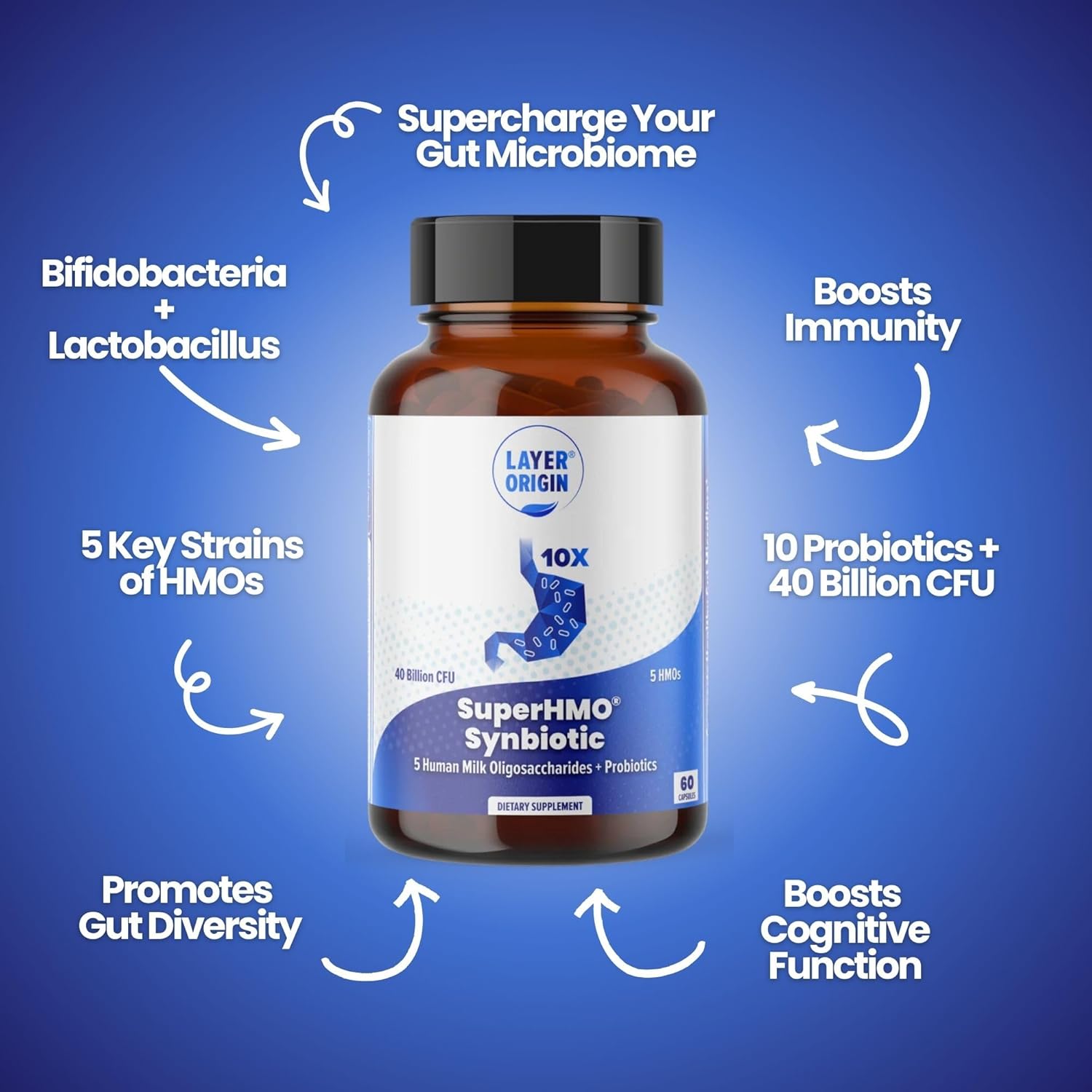
Layer Origins
"Feel better almost immediately I have dysbiosis that has led to SIBO, systemic inflammation, dermatological and joint related issues. On bad flares I get intense joint inflammation and pain to the point of feeling as if I’ve had arthritis for fifty years. Taking this product for just two or three days reverses the inflammation to where I honestly can’t even feel it and my SIBO gas is reduced significantly. This stuff does not make me feel bloated and I can barely tell it is in my shaker" J.