Milk: Nature's First Microbiome Builder
by Mary Ferrari
“Breastfed infants typically develop a greater abundance and diversity of bifidobacteria than formula-fed infants.”
How Milk Shapes the Infant Gut
The composition and diversity of the gut microbiome play a fundamental role in human health beginning at birth. Scientists now recognize that the trillions of microorganisms living in the digestive tract influence far more than digestion. A healthy gut microbiome contributes to immune development, metabolism, behavior, cognition, socialization, and neurological function, while also helping protect against conditions such as obesity, diabetes, inflammatory bowel disease, infectious diarrhea, and even colorectal cancer.
The first three years of life represent a critical window for microbiome development. During this time, the infant gut undergoes constant change as beneficial microbes establish themselves and mature into a stable microbial community. Colonization begins immediately after birth. Infants delivered vaginally are first exposed primarily to bacteria from their mother’s birth canal and intestinal tract, whereas babies born by cesarean section are initially colonized mainly by microbes from the mother’s skin and the surrounding environment. These early microbial differences can influence the composition of the developing gut microbiome.
After birth, diet becomes one of the most important factors shaping this rapidly developing ecosystem. During most of the first year of life, breast milk or infant formula provides nearly all of an infant’s nutrition. Both feeding methods encourage the growth of beneficial Bifidobacterium species, which quickly become dominant members of the infant gut microbiota. However, breastfed infants typically develop a greater abundance and diversity of bifidobacteria than formula-fed infants. The American Academy of Pediatrics recommends exclusive breastfeeding for the first 6 months of life and the gradual addition of solid food during the succeeding 6 months of the first year; however, only 25% of infants in the USA achieve this goal. This early dominance of beneficial bacteria helps establish an intestinal environment that supports healthy digestion, immune maturation, and long-term health.
Rather than simply providing nutrients for growth, milk acts as one of nature’s first architects of the infant microbiome, supplying specialized compounds that help shape the microbial community during one of the most important periods of human development.
Human Milk Oligosaccharides: Feeding the Good Bacteria
One of the most remarkable components of human milk is a group of complex carbohydrates called human milk oligosaccharides (HMOs). Although they are the third most abundant solid component of breast milk, babies cannot digest them. Instead, HMOs travel intact to the large intestine, where they become food for beneficial bacteria.
The primary beneficiaries are Bifidobacterium species, especially Bifidobacterium infantis. These bacteria have evolved alongside humans and possess specialized enzymes that allow them to efficiently break down HMOs. As they ferment these sugars, they produce short-chain fatty acids such as acetate and lactate, compounds that nourish intestinal cells, maintain an acidic environment that discourages harmful bacteria, and contribute to healthy immune development.
This relationship represents one of nature’s most elegant examples of co-evolution: mothers produce nutrients specifically designed not to feed the infant directly, but to nourish the microbes that help protect the infant.
Breast Milk and Formula Are Not Identical
Modern infant formulas have made significant nutritional advances, but they still differ from human milk in one important respect. Human milk contains more than 250 different oligosaccharides in concentrations that are 20 to 1,000 times higher than those found in cow’s milk. These complex molecules remain difficult to reproduce on a large scale.
Many formulas now include prebiotics such as galactooligosaccharides (GOS), fructooligosaccharides (FOS), or polydextrose to help support beneficial bacteria. While these ingredients can provide some similar benefits, they do not fully replicate the diversity and biological activity of the naturally occurring HMOs found in breast milk.
As a result, breastfed infants generally develop a microbiome richer in bifidobacteria than formula-fed infants, although both feeding methods can support healthy growth.
Why Genetics Also Matters
Interestingly, not every mother produces the same types of milk oligosaccharides. The ability to secrete certain fucosylated HMOs depends largely on a gene known as FUT2. Mothers with an active FUT2 gene are called “secretors” because they produce high levels of these specialized sugars in their milk. Mothers without a functional FUT2 gene are known as “non-secretors” and produce much lower amounts.
These genetic differences influence the infant microbiome. Babies receiving milk rich in fucosylated HMOs generally develop greater numbers and diversity of bifidobacteria. In contrast, infants of non-secretor mothers often have fewer beneficial bacteria during early life.
Scientists continue to study how these differences may affect susceptibility to infections, allergies, obesity, inflammatory bowel disease, and other chronic conditions later in life.
The Changing Microbiome During Growth
The infant microbiome is not intended to remain the same forever. More than 40 different species of Bifidobacterium have been identified, and the strains that dominate the gut change as a child’s diet and age change. Breastfed infants are typically colonized by Bifidobacterium infantis, B. breve, and B. bifidum. Among these, B. infantis is uniquely adapted to digest the entire variety of human milk oligosaccharides (HMOs) found in breast milk. In some developing regions of the world, B. infantis may account for up to 90% of the infant gut microbiome. In developed countries such as the United States, however, B. breve and B. bifidum are more commonly found than B. infantis.
As milk is gradually replaced by solid foods, the infant microbiome begins a natural transition. The populations of milk-loving bifidobacteria decline because their primary food source—milk oligosaccharides—is no longer abundant. They are replaced by adult-associated species such as Bifidobacterium longum, B. adolescentis, B. animalis, B. catenulatum, and B. pseudocatenulatum. Unlike the infant strains, these bacteria are adapted to digest the complex carbohydrates found in fruits, vegetables, grains, and other plant-based foods rather than milk sugars.
This transition is a normal part of development and reflects the changing nutritional needs of the growing child. Researchers believe that establishing a healthy population of infant-associated bifidobacteria during the milk-feeding stage helps build the foundation for a resilient adult microbiome that supports digestive and immune health throughout life.
Nature’s Blueprint for Early Health
Human milk demonstrates that nutrition is about much more than vitamins, minerals, protein, and fat. Its unique oligosaccharides are biological signals that shape the infant microbiome, encourage the growth of beneficial bacteria, and help train the developing immune system.
Although genetics, delivery method, antibiotic exposure, and diet all influence the composition of the microbiome, early feeding remains one of the strongest factors determining which microbes become established during infancy. By nourishing beneficial bacteria such as Bifidobacterium, human milk helps create an intestinal environment that supports healthy digestion, strengthens immune defenses, and promotes normal development during one of the most important stages of life.
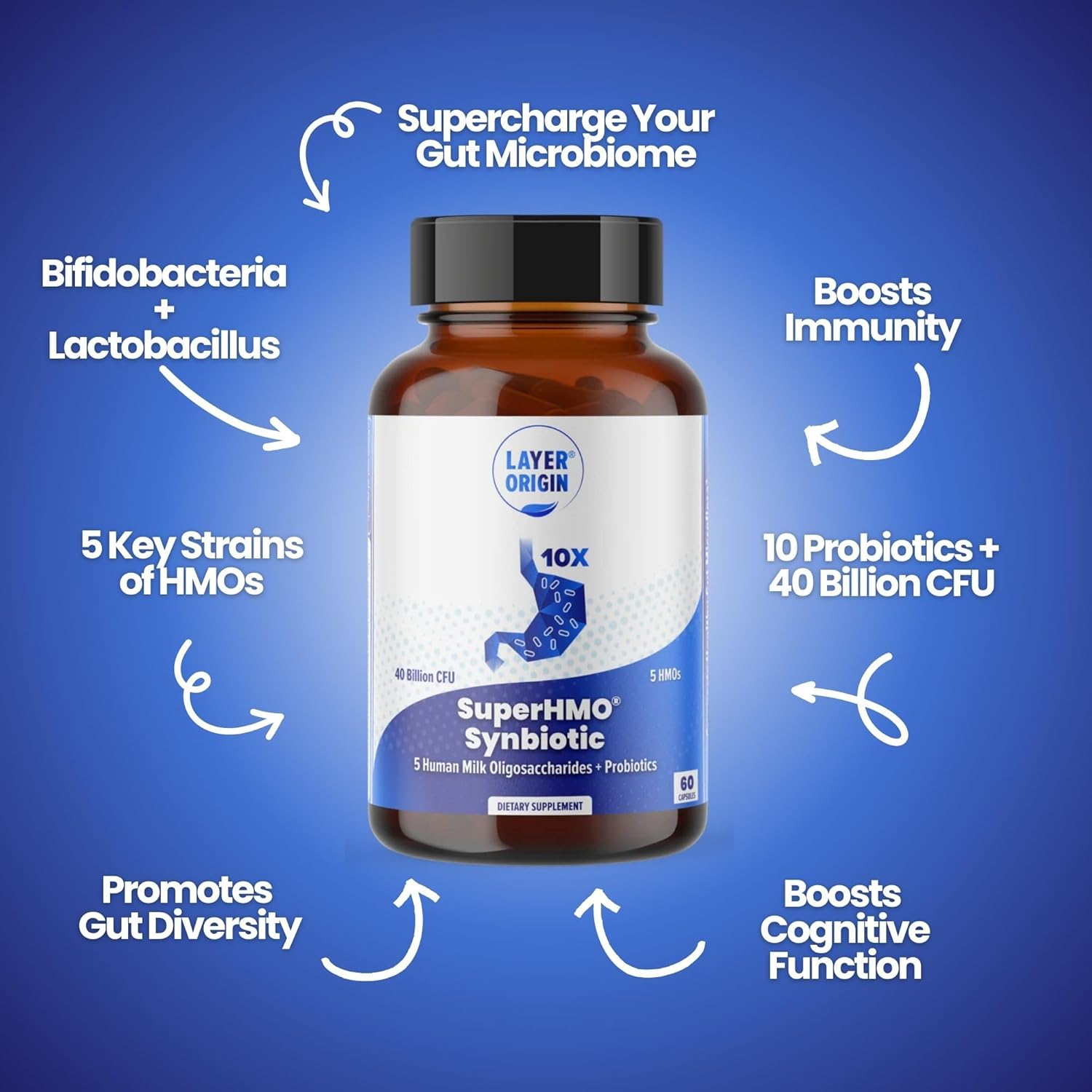
Layer Origins
"Feel better almost immediately I have dysbiosis that has led to SIBO, systemic inflammation, dermatological and joint related issues. On bad flares I get intense joint inflammation and pain to the point of feeling as if I’ve had arthritis for fifty years. Taking this product for just two or three days reverses the inflammation to where I honestly can’t even feel it and my SIBO gas is reduced significantly. This stuff does not make me feel bloated and I can barely tell it is in my shaker" J.
Common Supplements, Fermented Foods, and Digestive Support
A comprehensive easy to follow color coded guide (a simple daily to do list) for common food product supplements and dietary practices that promote gut health. 6 pgs. PDF Paypal Checkout Learn more....
video coming soon….