Could Your Gut Hold the Key to a Longer, Healthier Life?
by Mary Ferrari
“As you get older, your gut microbiome becomes less diverse and more inflammatory, contributing to a process scientists call “inflammaging”.”
The human gut is far more than a digestive organ. It is home to trillions of microorganisms that form the gut microbiome, a complex ecosystem that influences digestion, metabolism, immunity, inflammation, and even brain function. Emerging research suggests that the health and diversity of this microbial community may play an important role in determining how well we age. A 2024 study supported by the National Institute on Aging found that older adults with more diverse and unique gut microbiomes were more likely to live longer than those whose microbiomes remained unchanged. These findings add to growing evidence that maintaining a healthy gut may be one of the keys to healthy aging and longevity.
Research on centenarians—people who live to 100 years of age or older—has revealed that they often possess gut microbiomes that are more diverse and balanced than those of younger elderly individuals. Studies have found that centenarians tend to have higher levels of beneficial bacteria, including Lactobacillus, Akkermansia, Roseburia, Methanobrevibacter, and members of the Clostridiales and Ruminococcaceae groups. Many of these microbes produce short-chain fatty acids (SCFAs), such as butyrate, acetate, and propionate, which help maintain the integrity of the intestinal barrier, regulate immune responses, reduce inflammation, and support overall metabolic health. These functions are increasingly recognized as important factors in preventing age-related disease.
One of the largest studies discussed in the review came from Japan in 2017. Researchers examined 441 healthy individuals ranging from newborns to centenarians in order to track how Bifidobacterium species shift over time. The study found that Bifidobacterium longum remained the dominant species throughout life, with detection rates of nearly 88% across all age groups. This suggests that B. longum may be one of the core microbial species supporting human gut health from infancy through extreme old age.
As people age, however, the gut microbiome often becomes less diverse and more prone to imbalance, a condition known as dysbiosis. This can contribute to increased intestinal permeability, commonly referred to as “leaky gut,” allowing bacteria and inflammatory compounds to enter the bloodstream. The resulting chronic, low-grade inflammation, often called “inflammaging,” has been linked to many conditions associated with aging, including cardiovascular disease, cognitive decline, frailty, and neurodegenerative disorders. Animal studies have further demonstrated the connection between the gut microbiome and aging by showing that transferring microbes from older mice to younger mice can promote inflammatory aging processes, while transferring microbes from young mice to older animals can improve metabolic and immune function.
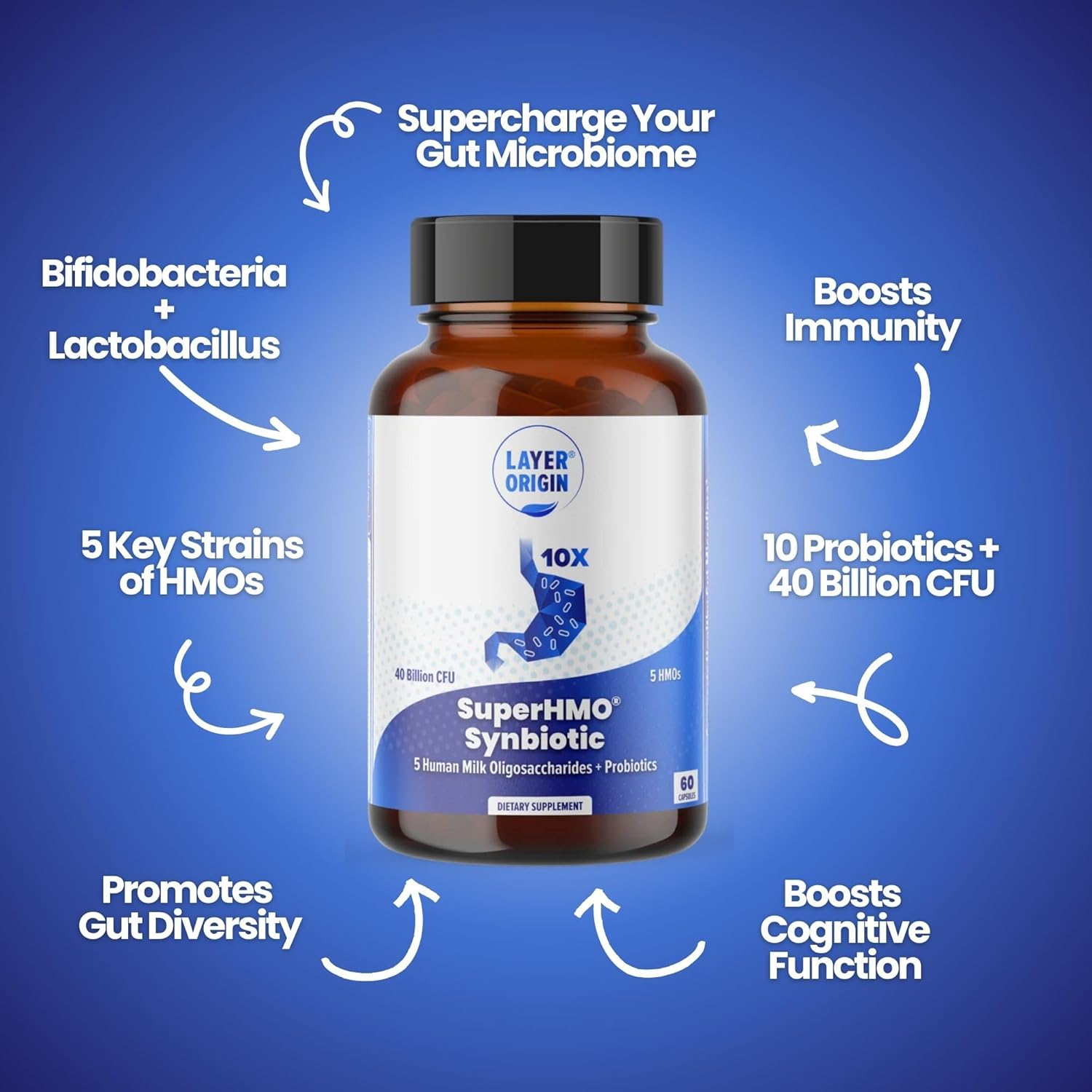
Fortunately, lifestyle choices can help support a healthier gut microbiome throughout life. A diet rich in fiber, fruits, vegetables, legumes, and fermented foods such as kefir and yogurt promotes beneficial microbial growth and SCFA production. Studies have also shown that dietary patterns such as the Mediterranean diet can improve gut health while reducing frailty and supporting cognitive function in older adults. In addition, emerging research suggests that probiotics, prebiotics, and human milk oligosaccharides (HMOs) may help increase beneficial bacteria and improve markers associated with healthy aging. Together, these findings suggest that nurturing the gut microbiome may be one of the most effective strategies for promoting longevity, reducing inflammation, and maintaining health as we grow older.
Source:
Is The Gut Microbiome the Key to Healthy Aging?
Gut microbiome pattern reflects healthy aging and predicts survival in humans
A human milk oligosaccharide alters the microbiome, circulating hormones, and metabolites in a randomizedcontrolled trial of older adults
J.M.C., A.S.-D., and R.H.B. are employees of Abbott Laboratories, which is a commercial manufacturer of nutritional products containing HMOs including infant formula. J.L.S. is a founder, a shareholder, and on the scientific advisory board of Novome Biotechnologies and Interface Biosciences. M.M.C., J.L.S., C.D.G., and Abbott Laboratories have filed a provisional patent application related to this work.

Layer Origins
"Feel better almost immediately I have dysbiosis that has led to SIBO, systemic inflammation, dermatological and joint related issues. On bad flares I get intense joint inflammation and pain to the point of feeling as if I’ve had arthritis for fifty years. Taking this product for just two or three days reverses the inflammation to where I honestly can’t even feel it and my SIBO gas is reduced significantly. This stuff does not make me feel bloated and I can barely tell it is in my shaker" J.
More info:
HMOs may have a specific impact on immuno-modulation based on their specific biochemical structure. Namely, LNFP-III has been shown to act as an innate Th2 promoter in vivo, for it stimulates maturation of murine dendritic cell 2 phenotypes and the release of IL-4 (Interleukin 4) and IFN-γ (Interferon-gamma). Promising results emerge from the investigation of Goehring et al., who demonstrated that infants fed a 2′-FL supplemented formula exhibit lower concentration of inflammatory cytokines (IL-1ra, IL-1α, IL-1β, IL-6, and TNF-α, tumor necrosis factor-alpha) compared to infants fed the control formula. Doherty and colleagues, systematically reviewed 10 articles from 6 different studies and found out that the abundance of HMOs was associated with reduced immune- mediated diseases and infection, such as cow’s milk allergy, gastroenteritis and respiratory tract infections, reduced human immunodeficiency virus (HIV) transmission and lower mortality among exposed infants. Therefore, they suggest that the impact and the benefits of HMOs may result in early programming of the immune system itself.
The dominance of Bifidobacteria in the gut of breastfed infants is largely due to their remarkable ability to digest human milk oligosaccharides (HMOs), the complex carbohydrates found in breast milk. This ability is believed to be the result of millions of years of co-evolution between humans and beneficial gut microbes, helping support infant survival and development. While other bacterial groups, including Bacteroides, Lactobacillus, Enterococcus, Streptococcus, and certain Clostridium species, can also utilize HMOs, infant-associated species such as Bifidobacterium longum subsp. infantis possess specialized enzymes that allow them to metabolize these compounds with exceptional efficiency.
Some bifidobacterial species partially break down HMOs and release intermediate nutrients that can be used by other beneficial microbes, creating a cooperative process known as cross-feeding. This interaction helps establish a healthy and diverse microbial ecosystem in the infant gut.
The digestion of HMOs by these bacteria produces short-chain fatty acids (SCFAs), including acetate, propionate, and butyrate. These compounds nourish colon cells, strengthen the intestinal barrier, lower gut pH, increase mucus production, and help regulate inflammation through the promotion of regulatory T cells. SCFAs also influence the gut-brain axis. In addition, HMO fermentation produces lactic acid, which further lowers intestinal pH, improves nutrient absorption, and helps inhibit the growth of harmful bacteria.
Human Milk Oligosaccharides: A Comprehensive Review towards Metabolomics
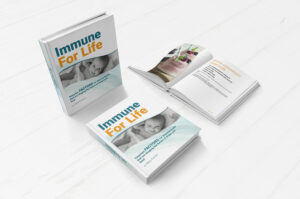
Immune For Life
Forgotten factors for life and health that are shaping the future of drugs and food.
Journey to a healthier lifestyle
Immune For Life
M. Ferrari
After decades of chronic health conditions and serious gut issues like IBS and SIBO, immune deficiencies and an autoimmune condition discover how I recovered my health thanks to natural oral immune therapeutics (maf and gcmaf). Due to a premature birth and being formula fed, I was a SAM child in real life. My book is a step by step journey you won't want to miss that illustrates how to regain or maintain health for all ages.