HMOs + Probiotics: A Powerful Pair in Formula Fed Infants
by Mary Ferrari
“Upper respiratory infections occurred in 55.4% of children receiving the HMO and probiotic combination, compared with 70.8% in the probiotic-only group and 85.4% in the placebo group. The combination group also had fewer cases of pneumonia and diarrhea.”
A child’s gut microbiome does much more than help digest food. During the first years of life, the bacteria living in the intestine help train the immune system, strengthen the intestinal barrier, and teach the body how to respond to harmful microbes. When this early microbial community develops properly, it can help protect against infections and allergic conditions. A new 2026 clinical trial published in Frontiers in Nutrition provides encouraging evidence that combining a human milk oligosaccharide (HMO) with specific beneficial bacteria may help support this important process.
Researchers studied 390 children between the ages of 1 and 3 years. Most had been exclusively formula-fed from birth, while a smaller number had been breastfed but weaned at least three months before entering the study. The researchers wanted to know whether adding 2′-fucosyllactose (2′-FL), one of the most abundant HMOs in human breast milk, to a probiotic supplement would provide greater protection than probiotics alone.
The children were divided into three groups. One group received 1 gram of 2′-FL daily, together with 1.5 billion colony-forming units (CFU) of Bifidobacterium infantis R0033 and 1.5 billion CFU of Bifidobacterium bifidum R0071. A second group received the same two bacterial strains without 2′-FL. The third group received a placebo. Supplementation lasted 12 weeks, followed by another 12 weeks of observation, allowing researchers to track health outcomes over six months.
The results were impressive. Upper respiratory infections occurred in 55.4% of children receiving the HMO and probiotic combination, compared with 70.8% in the probiotic-only group and 85.4% in the placebo group. The combination group also had fewer cases of pneumonia and diarrhea.
The study found that diarrhea occurred less often among children receiving the combination of 2′-FL and probiotics. Over the six-month study period, 10% of children in this group experienced diarrhea, compared with 13.1% receiving probiotics alone and 17.7% receiving the placebo. The combination group also had fewer total days of diarrhea: 73 days, compared with 124 days in the placebo group. The reduction in diarrhea was statistically significant when compared with the placebo group.
Diarrhea incidence over six months
Of the 390 children, 130 were assigned to each group:
- Placebo 23 (17.7%)
- Probiotics alone 17 (13.1%)
- 2′-FL + probiotics 13 (10.0%)
Eczema was reported in only 1.5% of children receiving the combination, compared with 2.3% in the probiotic group and 13.1% in the placebo group. These findings suggest that supporting the gut microbiome with both a beneficial bacterium and the food it can use may offer advantages over probiotics alone.
The researchers also examined changes inside the gut. After three months, the children receiving the combination showed changes in their gut bacterial communities, including increases in certain Bifidobacterium species. Two species, B. catenulatum and B. kashiwanohense, increased following supplementation. Some of these changes were still present three months after supplementation ended. This is particularly interesting because it suggests that providing the right nutrients may help certain beneficial bacteria establish themselves in the intestinal environment.
The immune findings were equally important. At the end of the six-month observation period, children receiving the combination had lower levels of fecal calprotectin, a marker of intestinal inflammation. They also had higher levels of secretory immunoglobulin A (sIgA), an antibody that helps protect the intestinal lining against harmful microbes. Together, these changes suggest improvements in intestinal immune balance and protective defenses.
There are limitations, however, the intervention lasted only three months, with another three months of follow-up. Longer studies are needed to determine whether the changes in the microbiome and immune system provide lasting benefits.
Nevertheless, this research provides valuable clinical evidence for the relationship between HMOs, Bifidobacterium, and early immune development. Rather than simply adding beneficial bacteria, the researchers supplied a specific nutrient that supports the gut microbial environment. This is an important distinction. The findings reinforce the idea that beneficial bacteria need the right nutritional support to perform their functions. Human milk naturally provides this combination during infancy, helping shape the developing microbiome and immune system. Understanding how these relationships work may open new possibilities for supporting children who do not receive the same early microbial and nutritional benefits.
Bovine Colostrum and Diarrhea
Acute diarrhea is one of the most severe diseases with high health care costs and high mortality among children, especially in developing countries. Each year, more than 700 million children under five years are affected by acute diarrhea worldwide. Approximately two to three million deaths (mainly in young children) are caused by diarrhea in developing countries annually. In China, the prevalence of acute diarrhea was 5% among children younger than 5 years. About 30% of children with diarrhea were rotavirus positive. Among the children with infectious diarrhea, the proportion of Rotavirus, Salmonella, Vibrio parahaemolyticus and Escherichia coli was 92%, 3%, 2% and 1%, respectively.
BC products were effective to control clinical symptoms and pathogenic agents, in terms of stool frequency, diarrhea occurrence and positive pathogen detection, of infectious diarrhea among children. From this meta-analysis, it is meaningful to promote the application of BC products among children with infectious diarrhea.
Bovine colostrum has also been studied for its potential to reduce diarrhea and support intestinal health. Rich in immunoglobulins, antimicrobial proteins, and other protective compounds, colostrum may help defend the intestinal lining against certain infectious organisms. A 2024 systematic review of 22 clinical trials found that diarrhea frequency decreased in most of the intervention groups studied. In one randomized trial involving 160 children with acute diarrhea they found that episodes of diarrhea decreased following four weeks of colostrum supplementation and those receiving bovine colostrum had significantly fewer episodes of diarrhea and vomiting after 48 hours than children receiving a placebo. These findings suggest that bovine colostrum may help reduce diarrheal symptoms, particularly in infectious diarrhea. Its protective components include immunoglobulins, lactoferrin, and other antimicrobial proteins that may help defend the intestinal lining and limit the effects of certain pathogens. A separate meta-analysis of randomized trials also reported improvements in stool frequency and diarrhea occurrence among children with infectious diarrhea.
Source:
2026
Chen K, Zhang X, Jin S, Zhong J, Chen H, Yue G, Cheng Y, Peng R, Fang Z, Liu F, Lu Z, Zhao L, Hu R, Tao X, He Q, Liu C. Precision synbiotic intervention with 2′-fucosyllactose and infant derived Bifidobacterium modulates gut-immune axis and reduces disease risk in toddlers: a randomized controlled trial. Front Nutr. 2026 Jul 30;13:1856180. doi: 10.3389/fnut.2026.1856180. Erratum in: Front Nutr. 2026 Sep 16;13:1957323. doi: 10.3389/fnut.2026.1957323. PMID: 42598364; PMCID: PMC13472563.
2019
Li J, Xu YW, Jiang JJ, Song QK. Bovine colostrum and product intervention associated with relief of childhood infectious diarrhea. Sci Rep. 2019 Feb 28;9(1):3093. doi: 10.1038/s41598-019-39644-x. PMID: 30816291; PMCID: PMC6395637.
Bovine colostrum and product intervention associated with relief of childhood infectious diarrhea
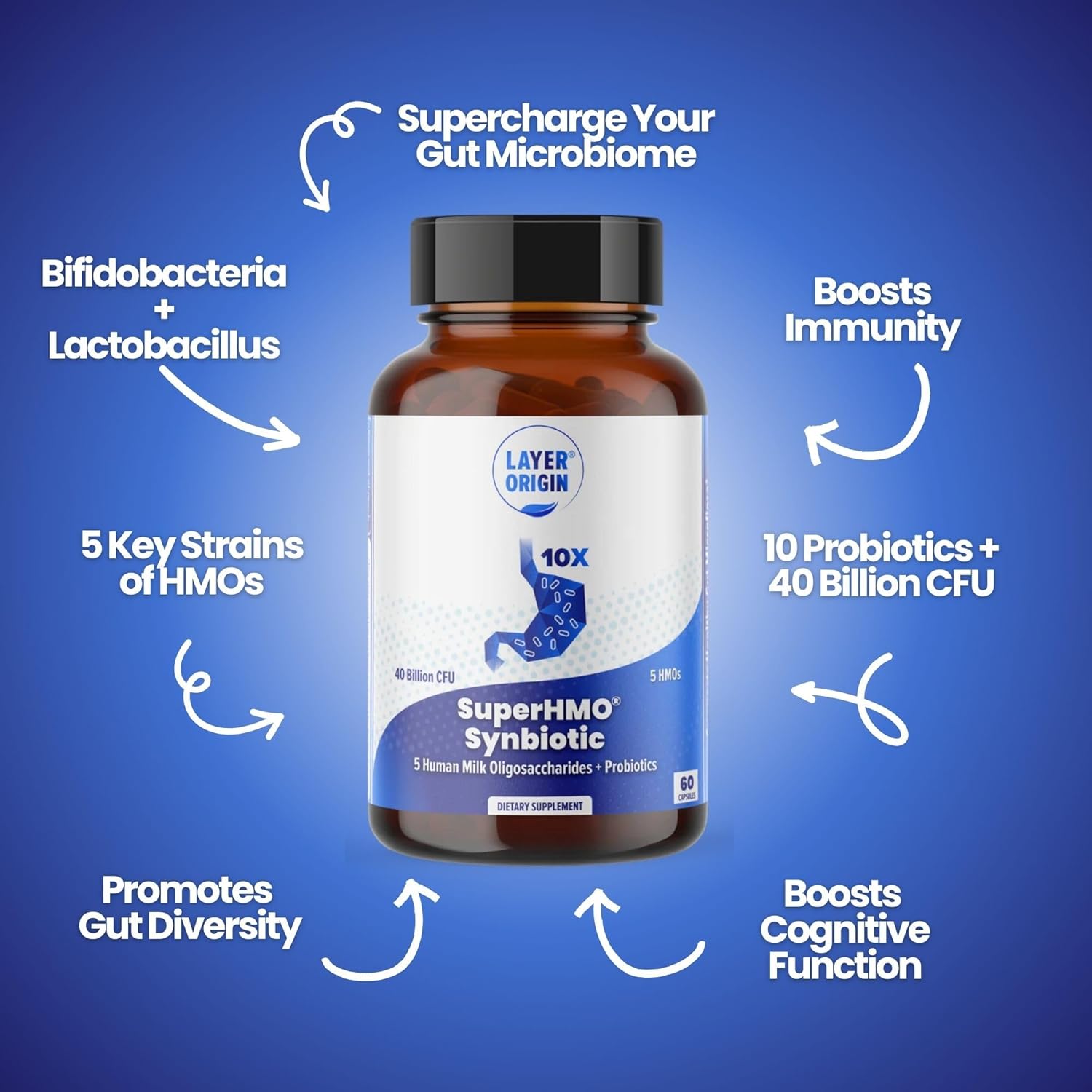
Layer Origins
"Feel better almost immediately I have dysbiosis that has led to SIBO, systemic inflammation, dermatological and joint related issues. On bad flares I get intense joint inflammation and pain to the point of feeling as if I’ve had arthritis for fifty years. Taking this product for just two or three days reverses the inflammation to where I honestly can’t even feel it and my SIBO gas is reduced significantly. This stuff does not make me feel bloated and I can barely tell it is in my shaker" J.