Inflammatory bowel diseases (IBD), including Crohn’s disease and ulcerative colitis, are becoming more common around the world. Disorders such as irritable bowel syndrome (IBS) are also increasing rapidly and placing growing pressure on healthcare systems. Researchers are now exploring new ways to manage these diseases by targeting one of the most important systems in the body: the gut microbiome. One promising approach involves human milk oligosaccharides, commonly called HMOs.
HMOs are special carbohydrates naturally found in human breast milk. They are the third most abundant solid component in breast milk after fats and lactose. Scientists have identified more than 200 different HMO structures. Unlike most carbohydrates, HMOs are not digested by humans for energy, instead, they act as highly specialized prebiotics that feed beneficial bacteria in the gut, especially species of Bifidobacterium.
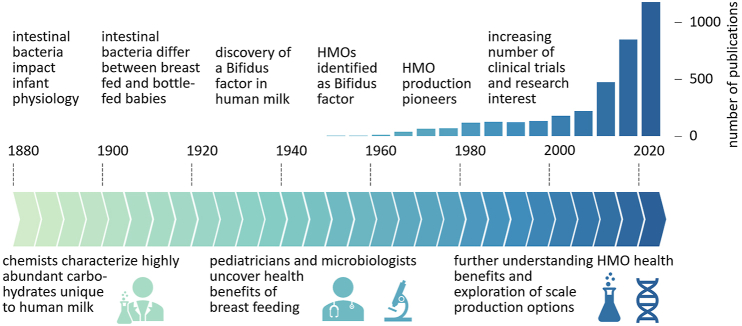
The health benefits of HMOs were first noticed many decades ago when researchers observed that breastfed infants had lower death rates and better health than formula-fed infants, scientists later discovered that certain substances in breast milk strongly promoted the growth of healthy bacteria known as “Bifidus” bacteria and this discovery eventually led to modern HMO research.
Today, researchers believe HMOs may help people of all ages, not just infants. Modern biotechnology and precision fermentation now allow HMOs to be produced commercially, making it possible to study their effects in adults with inflammatory diseases such as IBS and IBD.
One reason HMOs are receiving so much attention is because gut bacteria play a major role in inflammatory diseases. In a landmark experiment researchers were able to transfer ulcerative colitis from sick mice to healthy mice through the gut microbiome and this important finding suggested that harmful changes in gut bacteria, known as dysbiosis directly contributes to disease development.
The growing burden of these diseases is also creating major economic problems. According to the review, annual healthcare costs in Europe are estimated at €900 to €2100 per IBS patient each year. For ulcerative colitis and Crohn’s disease, direct annual healthcare costs can reach €2000 to €3500 per patient. In Italy, IBD prevalence has increased dramatically over recent decades. Considering the growing population, as well as the societal and public health effects of the increased prevalence rates, it becomes apparent why funding initiatives such as the European Innovative Medicines Initiative, as part of the Horizon 2020 program, target noncommunicable inflammatory diseases.
Because traditional treatments often focus on suppressing the immune system, scientists are searching for safer and more natural methods to improve gut health and HMOs may provide one of those strategies.
Researchers describe three major ways HMOs work in the body. First, they selectively feed beneficial bacteria such as Bifidobacteria, called a bifidogenic effect. Unlike many common fibers that feed a wide variety of microbes, HMOs appear to specifically encourage the growth of health-promoting bacteria.
Second, HMOs help regulate the immune system. Studies showed that HMOs can lower the activity of inflammatory molecules such as IL-8, IL-1β, and TNF-α. These inflammatory compounds are strongly associated with chronic intestinal inflammation.
Third, HMOs help strengthen the intestinal barrier. They help prevent harmful bacteria from attaching to the gut lining and invading intestinal tissue and this protective effect may reduce infections and help prevent inflammation from worsening.
Several specific HMOs have shown promising results in laboratory studies. One of the most studied HMOs is 2′-fucosyllactose, also called 2′-FL. Researchers found that this HMO supports beneficial bacteria while helping block harmful microbes. Other HMOs such as 3′-sialyllactose and lacto-N-tetraose also demonstrated anti-inflammatory and barrier-supporting effects.
HMOs may be especially valuable because they appear to support the microbiome without strongly stimulating potentially harmful bacteria. In laboratory studies, HMOs promoted beneficial bacteria such as Bifidobacterium bifidum while not encouraging the growth of opportunistic pathogens like certain Streptococcus species.
Much of the strongest clinical evidence currently involves infants. Breastfed infants receiving HMOs tend to develop healthier gut microbiomes rich in Bifidobacteria. HMOs have also been associated with lower risks of infections, necrotizing enterocolitis, diarrhea, respiratory infections, and excessive inflammation in infants.
Research in adults is still developing, but scientists are increasingly interested in using HMOs to manage inflammatory conditions because adults naturally have far fewer Bifidobacteria than infants, and these beneficial bacteria decline even more with aging. Researchers believe restoring these microbes may improve gut health and immune homeostasis.
Interest in HMOs is also growing outside the scientific community. Online discussions show that some individuals with IBS, SIBO, and other gut disorders are experimenting with HMO supplements.
Although much more research is needed, HMOs represent an exciting new direction in gut health research. Instead of only treating symptoms after disease develops, HMOs may help stabilize the microbiome, strengthen the intestinal barrier, and reduce inflammation before severe disease occurs. Scientists hope these naturally inspired compounds could eventually become safe and effective tools for supporting digestive and immune health across all stages of life.