A Landmark Discovery: HMOs Directly Regulate Human Immune Cells
by Mary Ferrari
“In the present study, we show for the first time that HMOs modulate human moDCs in a microbiota-independent way.”
In the past decades, there has been a growing appreciation that breast milk beneficially supports the innate immune system and modulates microbiota composition during the first months of life. Breastfeeding is known to reduce the risk of inflammatory diseases, infectious diseases, asthma and allergic disease, as well as autoimmune diseases. The developing immune system must learn one of its most important lessons: how to distinguish harmless substances from genuine threats. This process, known as immune tolerance, is essential for preventing excessive inflammation, allergies, and autoimmune disease throughout life. For a long time, protection against pathogens was attributed to secretory IgA, which could capture pathogens from the gastrointestinal system of the child and later milk components were identified as possible immune modulators. Today among the various bioactive components in breast milk, human milk oligosaccharides (HMOS) have been suggested to play a key role. HMOS are a diverse mixture of over 1000 individual oligosaccharides that belong to different core structures consisting of short chain and long chain oligosaccharides typically present in a 9:1 ratio. In this paper the term “HMOS” is used as term for the complete mixture of HMOS, when individual compounds are referred to, they are labelled with their specific name. Among the most abundant oligosaccharides present in the majority of human milk samples, are 2’‐fucosyllactose (2’FL), 3’‐sialyllactose (3’SL), 6’‐sialyllactose (6’SL), and Lacto‐N‐Fucopentaose I (LNFP‐I), with a disaccharide lactose backbone at the reducing end, consisting of glucose, galactose, N‐acetyl‐glucosamine, fucose and sialic acid. While human milk oligosaccharides (HMOs) are widely recognized for their ability to nourish beneficial bacteria such as Bifidobacterium infantis, growing evidence shows that these remarkable carbohydrates also communicate directly with the immune system. It is known that HMOS are sampled by the lamina propria residing dendritic cells (DCs). In addition, some structures have been detected in systemic circulation, suggesting absorption in the small intestine. These findings indicate possibilities of direct interaction between HMOS and human dendritic cells.
A landmark study published in 2019 demonstrated for the first time that HMOs can regulate human immune cells independently of the gut microbiota, revealing an entirely new mechanism by which breastfeeding helps shape lifelong immune health.
Dendritic cells act as sentinels of the immune system and they originate from hematopoietic stem cells in the bone marrow and migrate throughout the body’s tissues, where they continuously sample their environment for microbes, dietary proteins, and other foreign substances. After capturing these antigens, they travel to nearby lymph nodes and present them to T cells, determining whether the immune system launches an inflammatory response or develops immune tolerance. Regulatory T cells (Tregs), by contrast, are a specialized subset of CD4⁺ T cells that develop primarily in the thymus, with additional Tregs generated in peripheral tissues under the guidance of tolerogenic dendritic cells. Rather than presenting antigens, Tregs suppress excessive immune responses and maintain tolerance to harmless substances and the body’s own tissues, helping prevent chronic inflammation and autoimmune disease.
Until recently, scientists believed that HMOs influenced immunity primarily by feeding beneficial gut microbes, which then produced metabolites that indirectly regulated immune cells. While this microbiome-mediated pathway remains critically important, researchers wondered whether HMOs might also interact directly with immune cells. To answer this question, investigators isolated a natural mixture of HMOs from pooled human milk and exposed human monocyte-derived dendritic cells (moDCs) to these carbohydrates under carefully controlled laboratory conditions. By removing the influence of intestinal bacteria, they could determine whether HMOs themselves possessed intrinsic immune-regulating properties.
The results were striking. As the researchers concluded, “In the present study, we show for the first time that HMOs modulate human moDCs in a microbiota-independent way.” Rather than triggering a strong inflammatory response, HMOs induced what scientists call a semi-mature or tolerogenic state. These dendritic cells remained capable of recognizing potential threats, but they shifted toward producing regulatory signaling molecules instead of inflammatory ones. Specifically, HMOs increased the production of interleukin-10 (IL-10) and interleukin-27 (IL-27), cytokines well known for promoting immune tolerance, while avoiding excessive production of highly inflammatory cytokines.
Perhaps even more important, these HMO-conditioned dendritic cells encouraged the development of regulatory T cells (Tregs). Tregs serve as the immune system’s braking mechanism, suppressing unnecessary immune reactions and maintaining tolerance to harmless dietary proteins, beneficial microbes, and the body’s own tissues. Adequate numbers of Tregs are essential for preventing autoimmune diseases and limiting chronic inflammation.
By directly encouraging dendritic cells to generate more Tregs, HMOs appear to participate in educating the developing immune system long before the infant’s microbiome has fully matured.
The study also demonstrated that HMOs reduced excessive inflammatory responses when dendritic cells were challenged with bacterial lipopolysaccharide (LPS), a potent inflammatory stimulus. Normally, LPS causes dendritic cells to release large amounts of inflammatory cytokines such as TNF-α, IL-6, and IL-12. However, dendritic cells exposed to HMOs before LPS stimulation produced significantly lower amounts of these inflammatory mediators while maintaining production of regulatory cytokines like IL-10. This suggests that HMOs do not suppress immunity altogether; instead, they help calibrate immune responses so they remain effective without becoming excessively inflammatory.
The researchers also investigated how HMOs communicate with dendritic cells. Their findings suggest that HMOs interact with immune receptors including Toll-like receptor 4 (TLR4) and DC-SIGN, two receptors involved in recognizing microbial molecules and regulating immune activation. By engaging these receptors, HMOs appear to influence the signaling pathways that determine whether dendritic cells promote inflammation or tolerance. Although additional research is needed to identify which individual HMOs bind specific receptors, these findings provide a biological explanation for how components of breast milk can directly educate the immune system during early life.
In this study human dendritic cells began showing measurable changes in gene expression within 16 hours of HMO exposure, with clear shifts toward a regulatory phenotype and altered cytokine production observed by 24 hours. These HMO-conditioned dendritic cells subsequently promoted regulatory T-cell development over the following several days, demonstrating that HMOs can rapidly influence immune cell programming albeit under controlled conditions.
This discovery significantly expands our understanding of how breastfeeding supports lifelong health. HMOs are no longer viewed solely as prebiotics that feed beneficial bacteria. Instead, they appear to serve a dual purpose.
First, they selectively nourish beneficial microbes such as Bifidobacterium infantis, creating a healthy microbial ecosystem. Second, they directly influence immune cells, encouraging the development of immune tolerance even before microbial metabolites begin exerting their effects. These complementary mechanisms likely work together during infancy to establish a balanced immune system capable of responding appropriately to infections while avoiding unnecessary inflammation.
For adults seeking to restore immune balance after years of microbiome disruption, these findings are especially intriguing. Clinical research has already demonstrated that HMO supplementation can promote beneficial bacterial growth in adults and support the reestablishment of infant-associated microbial functions. Combined with evidence that HMOs also directly regulate dendritic cells, it appears that these unique carbohydrates may influence immune health through two complementary pathways: one by rebuilding the microbiome and another by acting directly on immune cells themselves. Together, these discoveries reinforce the remarkable biological design of human milk and suggest that HMOs remain one of nature’s most sophisticated tools for programming immune tolerance across the lifespan.
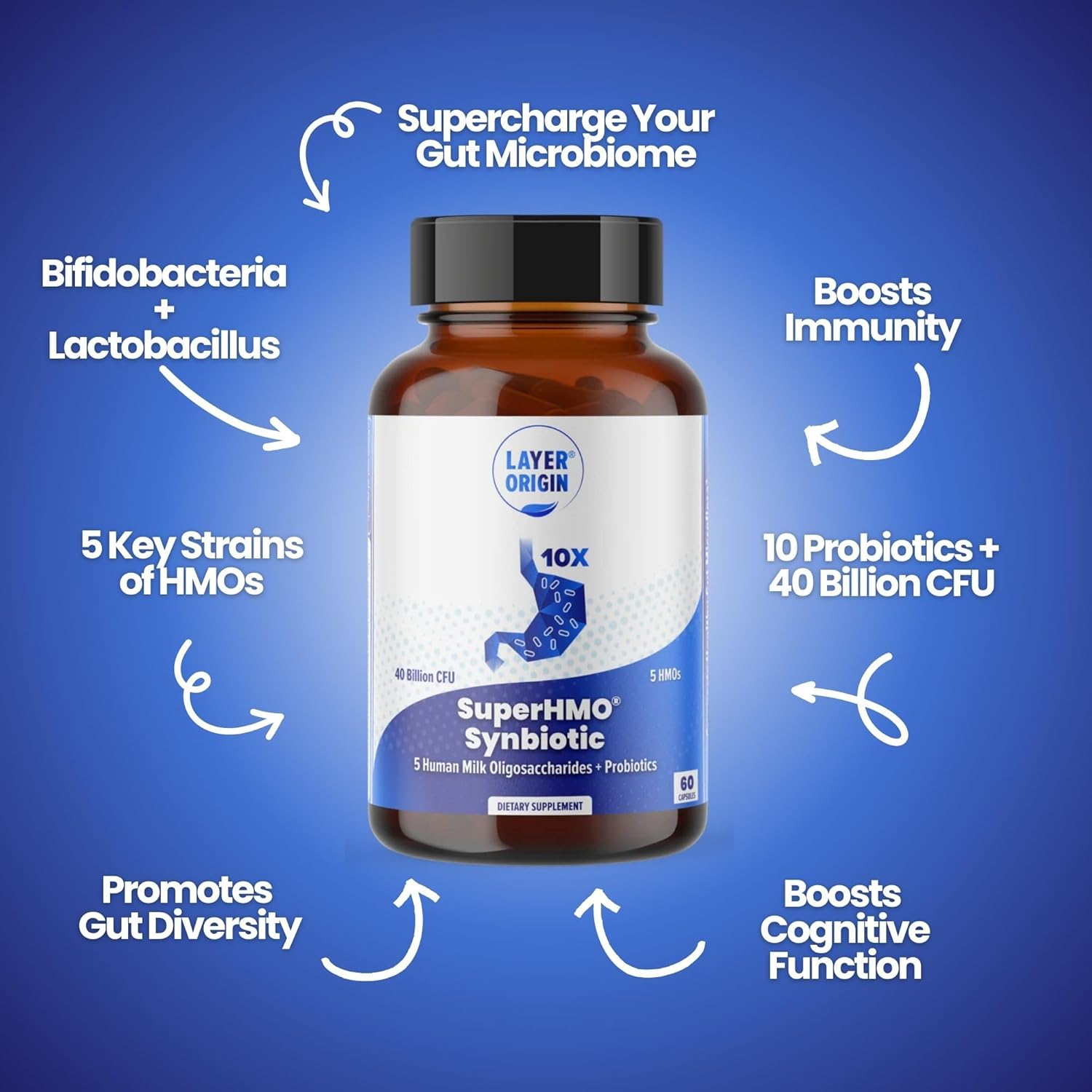
Layer Origins
"Feel better almost immediately I have dysbiosis that has led to SIBO, systemic inflammation, dermatological and joint related issues. On bad flares I get intense joint inflammation and pain to the point of feeling as if I’ve had arthritis for fifty years. Taking this product for just two or three days reverses the inflammation to where I honestly can’t even feel it and my SIBO gas is reduced significantly. This stuff does not make me feel bloated and I can barely tell it is in my shaker" J.
Why Similar Biological Mechanisms Are Expected
The findings of this study are particularly relevant because the human milk oligosaccharides (HMOs) used in modern dietary supplements are not synthetic imitations. High-purity HMOs produced through precision fermentation, including 2′-fucosyllactose (2′-FL), 3′-sialyllactose (3′-SL), and 6′-sialyllactose (6′-SL), are structurally identical to the molecules naturally present in human breast milk. Their three-dimensional molecular structures, glycosidic linkages, and biological properties are the same, allowing immune receptors to recognize them just as they would naturally occurring HMOs. Numerous analytical studies have confirmed that these precision-fermented HMOs are bio-identical, or nature-identical, to their counterparts found in human milk.
Equally important, HMOs are remarkably resistant to digestion. Unlike most dietary carbohydrates, they are not broken down by stomach acid or digestive enzymes in the upper gastrointestinal tract. Instead, they travel largely intact through the stomach and small intestine before reaching the intestinal lumen and the gut-associated lymphoid tissue (GALT), where much of the body’s immune system resides. This allows HMOs to come into direct contact with intestinal immune cells, including dendritic cells, providing a plausible biological pathway for the immune-modulating effects observed in laboratory studies.
The study discussed above demonstrated that HMOs can directly influence human dendritic cells independently of the gut microbiota, indicating that these carbohydrates possess intrinsic immunological activity. Because commercially available precision-fermented HMOs are chemically identical to those used by nature, there is strong biological plausibility that they interact with the same immune receptors and activate the same cellular signaling pathways. Although laboratory findings cannot automatically be assumed to produce identical effects in every individual, this mechanism is supported by human clinical trials showing that oral HMO supplementation favorably alters immune biomarkers, reduces inflammatory signaling, strengthens the intestinal barrier, and promotes a healthier gut microbial ecosystem. Together, these findings suggest that the benefits of HMOs arise through complementary mechanisms: directly modulating immune cells while simultaneously reshaping the gut microbiome to support long-term immune balance.
What if two natural immune molecules could influence the same immune cells but in remarkably different ways?
Human Milk Oligosaccharides (HMOs) and Macrophage Activating Factor (GcMAF) both interact with dendritic cells, the “conductors” of the immune system. HMOs promote immune tolerance and help prevent excessive inflammation, while GcMAF (MAF) supports immune homeostasis by enhancing immune surveillance and the body’s ability to respond to abnormal cells.
How can two molecules acting on the same cells produce such different but complementary effects?
How quickly can Human Milk Oligosaccharides (HMOs) begin influencing the immune system? Research suggests they may start interacting with dendritic cells within hours, with changes in regulatory immune signals appearing within about a day. Could regulatory T cells begin developing within days? And how long might it take for these early effects to reshape immune function over weeks or even months?
Effects on Dendritic Cells
- Human Milk Oligosaccharides (HMOs): Found in human breast milk, HMOs interact with C-type lectin receptors (such as DC-SIGN) on dendritic cells. They drive DCs toward a “semi-mature” state, meaning they induce the secretion of anti-inflammatory and regulatory cytokines (like IL-10 and IL-27), but do not trigger pro-inflammatory responses. This helps dampen allergic reactions and prevents overactive Th1-type inflammation, promoting immune homeostasis for the developing infant.
- Macrophage Activating Factors (GcMAF): Derived from vitamin D-binding protein, GcMAF is an endogenous immune-modulating protein. Studies suggest that in addition to activating macrophages, GcMAF can increase the maturation rate of dendritic cells. It enhances their ability to present antigens and stimulates the release of pro-inflammatory cytokines, driving cell-mediated, anti-tumor immune responses.
NEW 2026
Naturally Immune For Life NEW 2026
Nature’s Microbiome Blueprint for Health and Longevity
What if many chronic immune-mediated diseases begin with a disrupted gut microbiome?